New publication: On ‘judicial innovation’ and self-restraint in the ECtHR


My latest article, co-authored with Kanstantsin Dzehtsiarou (Surrey, but soon to be of Liverpool) has been published in advance access format by the Human Rights Law Review. The paper is entitled “Managing Judicial Innovation in the European Court of Human Rights” and can be download (££) here. The abstract is as follows:

Since its establishment, the European Court of Human Rights has developed into a constitutionalist actor within and beyond the continent of Europe; a development that is in no small part due to judicial innovations, such as evolutive interpretation. Such innovation has resulted in a tension between the Court and the contracting parties that may conceivably call into question states’ diffuse support for the Court. We argue that this tension is addressed by the Court by means of a nascent model of judicial self-restraint discernible from the Court’s docket management, its cognisance of non-legal factors in particularly contentious cases and its use of consensus-based interpretation. While arguably necessary, such a model is not cost-free; rather, it may have implications for the quality of the Court’s decision-making and its standing in the eyes of other stakeholders, such as non-governmental organizations and complainants.

Continue reading “New publication: On ‘judicial innovation’ and self-restraint in the ECtHR”

Referrals to the Grand Chamber of the ECtHR

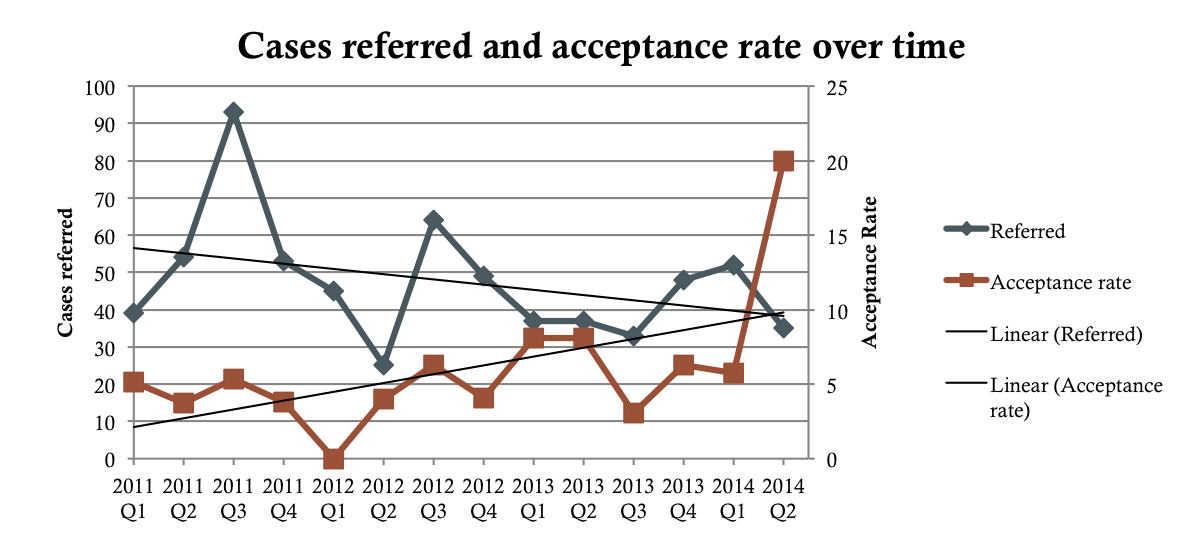
images-4Over the past year or so I have been working on a small-scale project exploring referrals to the Grand Chamber of the European Court of Human Rights under Article 43 of the Convention.

The project started out with me being interested in why no reasons are given for the refusal to accept a referral request, however it has moved on to concentrate on the concept of ‘seriousness’ as used in the relevant provisions of the Convention and rules of court. The key question that I am concerned with is how we identify which questions are ‘serious enough’ for the Grand Chamber to be convened, bearing in mind that hearing a case before the Grand Chamber involves a substantial investment in time, resources and judicial energies.

Article 43 provides:

  1. Within a period of three months from the date of the judgment of the Chamber, any party to the case may, in exceptional cases, request that the case be referred to the Grand Chamber.
  2. A panel of five judges of the Grand Chamber shall accept the request if the case raises a serious question affecting the interpretation or application of the Convention or the protocols thereto, or a serious issue of general importance.
  3. If the panel accepts the request, the Grand Chamber shall decide the case by means of a judgment.

RefsThe project, which I am now writing up, studies referral requests and decisions from 2011-2014. This confirms that the acceptance rate for referral requests is very low (as demonstrated by the chart to the left) and that the nature of the alleged violation is not, per se, the relevant indicator of seriousness. Rather, seriousness is determined largely by reference to the potential implications of the decision ‘below’ for consistency, evolution and jurisprudential coherence related to the Convention.

I presented this as a ‘work in progress’ to the Oxford Human Rights Hub where I am a visiting fellow this year back in February, and the audio from the presentation is available here. There is a very limited amount of scholarship on Article 43 referrals, at least in English. I would be grateful for suggestions from any readers who are aware of relevant work as I move towards finalising this paper.

New Report: de Londras & Grozdanova on Victims’ Rights in Ireland

Some time ago I was invited to act as a country expert in the IALS/CECL led project on the implementation of the EU Victims’ Rights Directive in Ireland. Together with Rumyana Grozdanova, a PhD student in Durham, I undertook both desk research and a series of interviews with key stakeholders in the Irish criminal justice system in the summer of 2013, which resulted in the preparation of a report on the challenges for implementation in Ireland. The report is available here.


Accounting for Rights in EU Counter-Terrorism: Recording

In June I gave a seminar at the Oxford Human Rights Hub entitled ‘Accounting for Human Rights in EU Counter-Terrorism’. The abstract is reproduced below (original), and a recording of the seminar is available on the OxHRH website here.

While a baseline of security is required in order to enjoy rights per se, ‘countering terrorism’ often infringes on the rights of suspected terrorists and, more broadly, undermines social cohesion and the rule of law. For that reason, it is important that we pay proper attention to rights in the making, implementation and review of counter-terrorism laws and policies.

In spite of this, the pre-legislative process in EUCT is problematic from a rights-based perspective, even where the formal ex ante impact assessment process is employed. This process, undertaken by the Commission, engages with stakeholders to predict the environmental, economic and social impacts of proposed measures and provide an evidence-base for political decision-making.

Social impacts include impacts on rights. Understandably, however, the qualitative analysis of rights impact is not easily assessed alongside the quantitative analysis of economic impact, with more ‘concrete’ data often appearing to receive more analytical weight. Thus, it is not unusual when reading these assessments to notice that the analysis of rights is ‘light touch’.

This might be expected given that forward-looking analyses are speculative, especially in relation to values that are difficult to quantify. But it points towards a need to afford more weight to rights in these assessments, especially as they can also shape later analyses of the ‘effectiveness’ of measures where such ex post assessment takes place.

We can only ascertain a measure’s actual impact once it is operational. Even at that point it is important to remember that the impact of EUCT will not be uniform across every member state or social group: the vast majority of implementation is national and there can be significant variations across the member states.

In spite of this, formal ex post facto review of EU counter-terrorism is remarkably infrequent, even where the measure in question expressly requires it. Of the 88 legally binding minding measures introduced since 2001, 68 required review, only 33 of which have so far taken place on time (10 have not reached their time limit).

The lack of effective and regular ex post facto review of EUCT is highly problematic from a rights-based perspective. The necessity and proportionality of any measure may vary according to changing security and social circumstances and thus requires regular review. Without this, we must rely on the hope that a court will have the opportunity to judicially review a measure to assess its legality, which assessment is only part of a comprehensive rights-related understanding of the impact of counter-terrorist measures.

The EU is a relative newcomer to counter-terrorism, and although it takes some account of rights, this is not sufficient to ensure EUCT is as rights-compliant as possible. The EU does have the potential to account more fully for rights in its counter-terrorism, in particular by enhancing participation in the life cycle of counter-terrorist law- and policy-making and instigating regular, participatory and evaluative review.